- Salaaz's Newsletter
- Posts
- Week 10
Week 10

Salaaz Market
10 Dec • Estimated Reading Time: 8 minutes

Hey everyone, welcome back to another week of Salaaz News. This week we’ll be looking into the baby food monopoly, and the age old debate of oils vs. fats, what to consider and what the healthier alternative is.
Baby Food: Gross Monopoly, Profits Over All

Now, for our parent’s with young children, they’ll know when they think of baby food, they think of brands such as Similac, Gerber, Nido, and Enfamil. Unfortunately, all of the above are subsidiaries of brands that directly support Israel. Similac is owned by Abbott, a USA-based health care manufacturer that houses research facilities in occupied Palestine. Nestle owns Gerber, Nido, and many others. We’ve previously covered Nestle’s extensive Israeli support in our previous newsletter. And lastly Enfamil owned by Mead Johnson, who is owned by Reckitt, are funding research into Israel’s AI and blockchain technologies.
There was recently a baby food shortage as well, driving up the prices following the pandemic, and the pandemic baby boom. But, what caused this shortage? WCNC reports there are 4 companies that control over 90% of the infant formula industry due to FDA regulations preventing entry of competition. Global Citizen reports these companies are putting profit over everything; exploiting the poorest companies and making them pay the highest prices for the same product.
Global Infant Formula Market was estimated $35 USD billion in 2022
Global Infant Formula Market was valued at $81.72 USD billion in 2024
Global Infant Formula Market expected to grow to $178.83 USD billion by 2032
In the USA, UK, France, and Germany, feeding a 2 to 3-month-old baby costs 1-3% of an average parent’s salary. In Indonesia, it costs up to 70% of an average parent’s salary.
The growth should identify the forced artificial inflation that is being caused by the goliaths, and it’s about time we switched to companies that actually care about us and our children’s wellbeings.
Local Alternatives: Canadian Royal Milk to the Rescue

We always say, local is the best, so we recommend the only Canadian manufacturer of baby food, Canadian Royal Milk. They opened up just in the nick of time, in 2019 as the pandemic was starting in Kingston Ontario. They’ve finally been approved to sell in Canada as of 2024. And they’re looking not just be the first Canadian baby formula brand, but to also help substantially boost the Canadian dairy market’s sales.
They’ve already built their $332 CAD million facility in Kingston Ontario and are looking to go up against the main competitors in the industry, and also assist with making Canada less reliant on American formula companies.
Canadian Royal Milk has a revenue of $14.9 CAD million in 2024
Employ over 150 skilled professionals and fully approved by CIA for infant formula
The Truth of Processed Oils
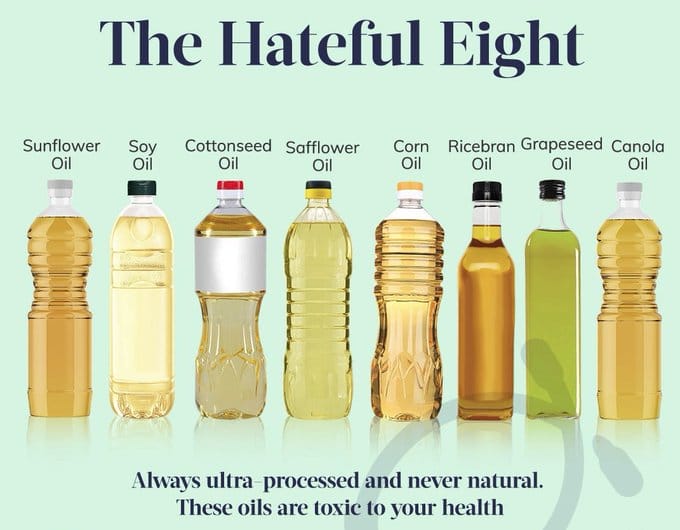
This is a conversation we hear at almost every family party, but everyone has a different opinion on it. We want to get straight to the facts and make sure our readers know what’s correct and what isn’t next time their parents bring up the topic. Did you know that vegetable oils were used an an alternative diesel fuel in the 1900s.
Not just that, the studies that first showed vegetable oil and margarine as a healthy alternative to fats for cooking were from the 1950s and since then, there have been many studies disproving all allegations against fats to cook, and now we have many studies showing negative benefits in these highly processed oils instead.
Heat causes high toxicity in processed oils diseases such as high blood pressure and cardiovascular disease
Made from majority GMO (genetically modified) sources
Are linked to over 11 health issues
Current market size for cooking oils is $216.36 USD billion for 2024
You can use this list to find what oils are considered bad oils such as canola, corn, sunflower, and others. But not all are bad, we’ll go over the alternatives below
Natural Fats and Alternatives
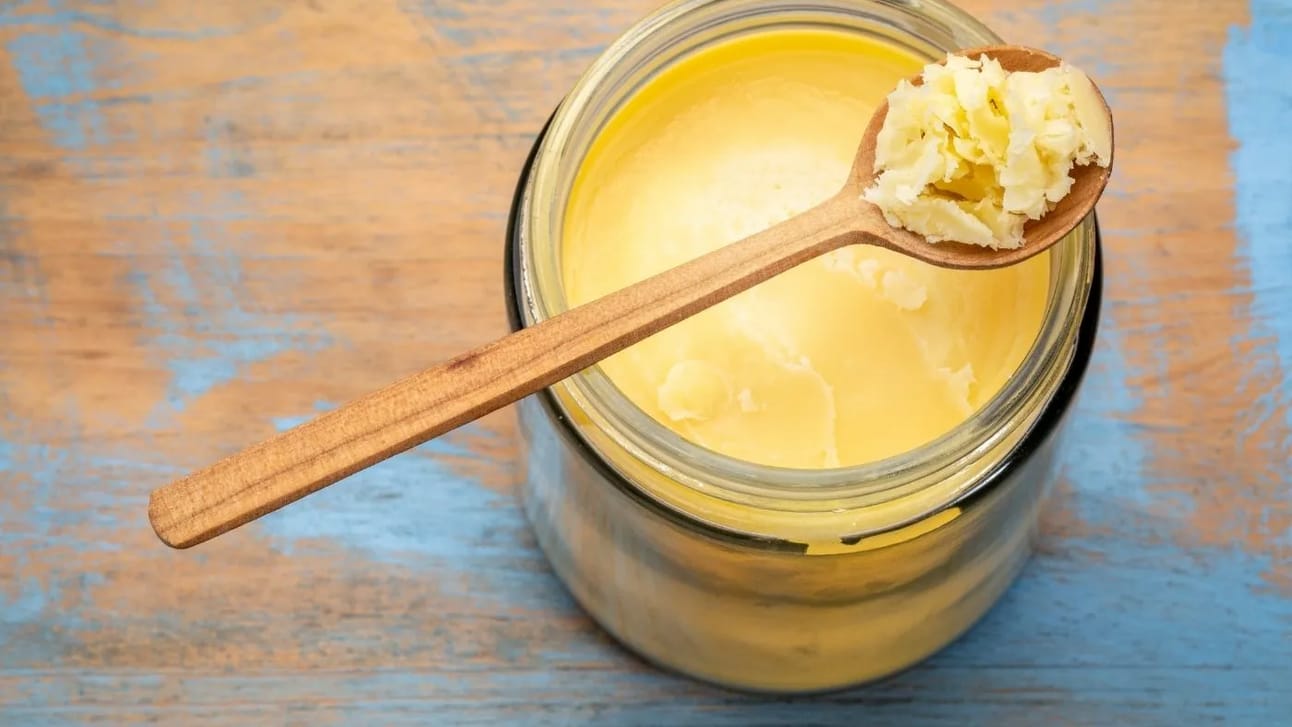
Now you might be wondering, what can you still cook with? A lot of you might’ve heard about olive oil, coconut oil, but nobody wants to cook with that, for some those are toppings or hair therapies. Natural fats are the age old choice when cooking food. Consider the following list:
Olive Oil
Coconut Oil
Avocado Oil
Flax Oil
Natural Fats (butter, ghee, etc)
Natural fats are an exceptional alternative to cooking oils, consider items such as ghee and butter. Both are derived from dairy, however, ghee can be lactose-free due to it’s milk solids being cooked out. Not only that, both are rich in soluble vitamins, such as Vitamin A, D, and E, and over 6 other benefits if used for cooking. Apart from this, they have a much higher smoking point than traditional processed oils.
Smoking point is the heat the oil can go to before it starts to smoke and the nutritional values break down. For oil it is 320 degrees F, for ghee it is upto 485 degrees F, a substantial difference.
It’s healthier, and the market is showing growth for the use of butter and ghee is a cooking oil alternative. Let us know what you choose.
We hope you enjoyed this week’s newsletter, give us your feedback below and we look forward to seeing you again next week!