- Salaaz's Newsletter
- Posts
- Week 15
Week 15

Salaaz Market
14 Jan • Estimated Reading Time: 8 minutes

Hello again, readers, and welcome to the second week of the new year! This week, instead of focusing on ethical alternatives, we’re diving into the real-world costs of unethical practices. Consumers are increasingly boycotting brands they see as unethical, and we’re here to shed light on the ripple effects—how these actions impact corporations, economies, and even entire countries.
Corporations/Financial Institutions That Have Made Drastic Changes:
Intel:

Intel shuts down Israeli-based start-up Granulate in less than 3 years after acquiring for $650 million USD in 2022
Intel initiating waves of layoffs in Israel, issuing ultimatum to 100s of employees to take severance or fight layoffs
Intel halts construction on its $25 billion USD factory that was being built on occupied Palestinian land
Country Funds & Financial Institutions:

Norway, one of the wealthiest countries in the world, and the one of the world’s hotspots for financial institutions and investment funds, has made large divestments in the last quarter of 2024:
In December, Norway's sovereign wealth fund, the world's largest, sold all of its shares in Bezeq, Israel’s largest telecoms company, due to its “services to the Israeli settlements in the occupied West Bank.”
In October, Storebrand, among the Nordic region's largest investors, sold its holdings in Palantir Technologies because of concerns that its “work for Israel might put the asset manager at risk of violating international humanitarian law and human rights.”
Along with Norway, see below the list of other countries initiating their divestments:
In August, USS, the UK’s biggest private pension fund, divested over $101 million USD of Israeli assets, including Israel Bonds, following sustained pressure from its members and the academic union, UCU.
In August, the French insurer AXA divested $20 million USD from 5 Israeli Banks.
Yokohama Tires:
Japanese tire maker Yokohama Tires has decided to shut down the Alliance Tire Factory in Hadera, located in Occupied Palestine, affecting 474 workers. The company attributes the closure to the availability of cheaper labor in South Asia and the high cost of sourcing and transporting raw materials from Israel, however, this is a move we’re seeing from other Japanese companies as well.
Ben & Jerry’s:
Ben & Jerry's sued its parent company Unilever in December for silencing its support for Palestinian rights. You can read all about this in our previous newsletter.
Puma:
In November, the German company had ended their sponsorship contract with the Israel Football Association (IFA) on December 31, 2024.
7-Eleven:
Despite not having a large amount or locations in Israel, 7-Eleven, the Japanese convenience store giant has decided to shut down all of its eight stores in Israel.
Chevron:

In October, fossil fuel giant Chevron— suspended its $429 million USD plan to expand an Israeli-controlled fossil gas field.
Carrefour:
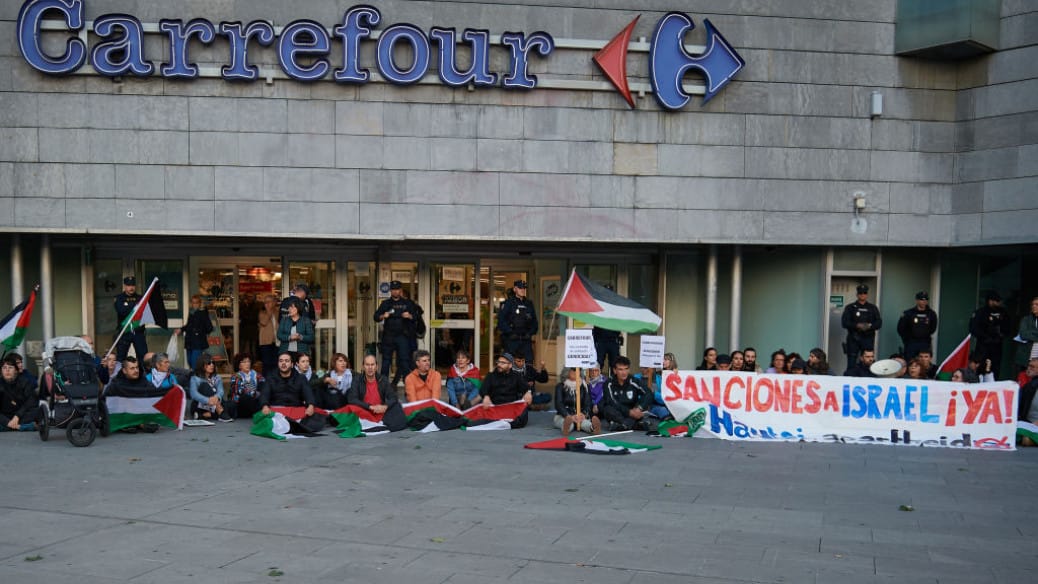
In November, Carrefour, is a French supermarket company which is partnered with Electra Consumer Products (ECP) which has a retail subsidiary Yenot Bitan that is active in Illegal Israeli settlements in Occupied Palestine. They closed all branches in Jordan. Carrefour’s partner in most of the Arab World, the Majid Al Futtaim Group ended all business with the French retailer in Jordan.
Sabra:
In December, the Strauss Group, an Israeli multinational food and beverage corporation, sold off 50% its shares, which summed $244 million USD, in the US-based company, Sabra, which mass produces the culturally-appropriated popular Arab dip, hummus due to dipping sales.
Country-Wide Effects:

Boycotting, divesting, and sanctioning hasn’t just hurt companies, it’s damaged an entire country’s economy. And these boycotts have been going on because Israel’s presence in Occupied Palestine. On May 30, 2024 130 top Israeli economists sent the Israeli PM a “clear and emphatic warning” of the “high probability” that Israel’s economy and society falling into a “spiral of collapse.”
Prominent Israeli economist Dan Ben-David warns that Israel could face collapse within four years unless its government fundamentally reforms its policies.
Israel’s debt accelerated to 1.25 trillion INS ($341.9 billion USD) up by 20% from 2022. And their credit rating is close to “junk”
This is just the tip of the iceberg, and there are many more stories we’ll see in the upcoming year, as consumers choose to support ethical consumerism. Don’t give up, and keep doing your part, even though you might feel its small, but together, it’s what drives these changes!
At Salaaz, our goal is to provide all consumers the ability to shop guilt free. Keep an eye out for our Alpha Launch date!
We hope you enjoyed this week’s newsletter, give us your feedback below and we look forward to seeing you again next week!