- Salaaz's Newsletter
- Posts
- Spices of Life: Health Benefits and the Hidden Cost of Inequality
Spices of Life: Health Benefits and the Hidden Cost of Inequality
Salaaz Newsleeter: Week 72

Salaaz Market
March 17, 2026
Spices are more than just flavour; they tell a story. The most complicated and unique foods can be a little tiny speck. But we as commoners tend to ignore the vast history, exploitation, and cultivation spices need to get to our rack.
From Colonization to Wealth Inequality
Historically, many spices were cultivated in a way where workers were forced into slavery, such as the Dutch exploiting the Salagam community in Sri Lanka for cinnamon or for nutmeg in Indonesia. One would believe that our modern times have moved beyond this exploitative practice, but unfortunately the power dynamics have shifted to make exploitation an acceptable form of global value chain inequality. Farmers get low, unstable profits, the middleman gets moderate profits, and the retail brands get very high profits.
Saffron is imported in a majority, over 80 percent, by Iran and requires extremely intensive labour, making it the most expensive spice in the world; however, it is being done by women farmers for unfair wages.
Vanilla has one of the most problematic forms of exploitation, soured by child exploitation and poverty in Madagascar.
There are reports of forced labour for chili peppers from Xinjiang, China, and in Mexico children harvest peppers on American tables.
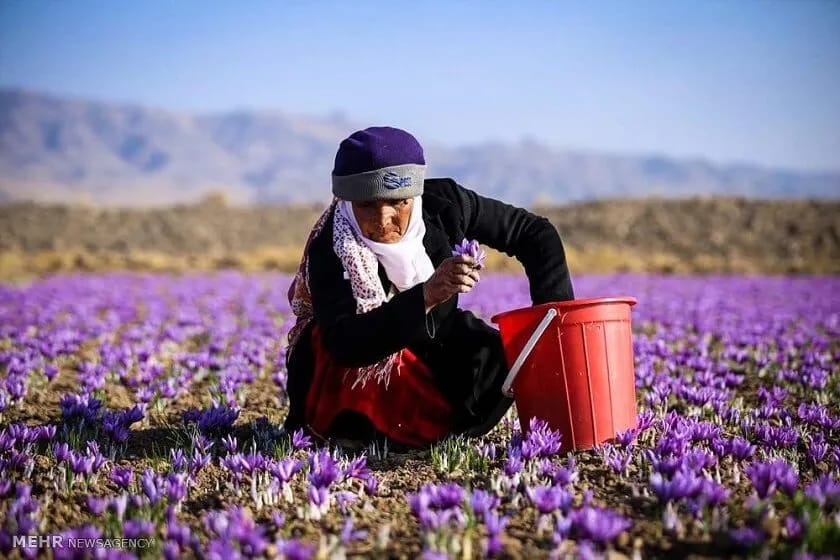
Iranian women harvesting Saffron
The spices in our food and neighbors' foods should never be the cultivation of unfair conditions on others, but they are. It does not have to be that way if greater support is given to reliable sourcing chains and support for underpaid workers instead of mass corporations.
Turmeric—The Epitome of Health?
Without a doubt, turmeric yields some strong health benefits; it supports immune, heart, and brain health. But is it the be-all and end-all spice? Not really, since many other spices yield similar incredible benefits as well.
Cumin has been reported to help with digestion and reducing IBS symptoms.
Cloves are among the highest antioxidants per gram.
Ginger has strong evidence indicating a cure for nausea.
Cinnamon helps regulate blood sugar levels.
Saffron is one of the few spices linked to mood and depression improvement.
Black pepper paired with turmeric increases absorption while providing its own antioxidants.
This makes for a great biryani, but more importantly, without a doubt, spices of all kinds provide health benefits, with a few caveats to be aware of.
There are two types of cinnamon, Cassia and Ceylon. Cassia causes potential liver damage if overused, making Ceylon the healthier option.
Overusing turmeric can also cause an upset stomach and GI distress.
Overusing spices can trigger acid reflux for sensitive stomachs.
Hence, a good balancing approach yields the best health benefits for the spice approach.
Simply Organic
- Available in local stores
- Quality vetted and certified

CanSpice Organic
- Calgary-based
- Canadian ingredients

Spices are more than just flavour; they carry centuries of history, cultural significance, and health benefits. Yet, the legacy of exploitation in their cultivation reminds us that what we put on our plates is never truly isolated from global inequalities. By choosing responsibly sourced brands like Simply Organic or CanSpice Organic, we can enjoy the remarkable benefits of turmeric, saffron, cinnamon, and other spices without contributing to unfair labour practices.