- Salaaz's Newsletter
- Posts
- Indigenous Land Rights, Justice vs Profit, Global Inequality, and Salaaz’s movement
Indigenous Land Rights, Justice vs Profit, Global Inequality, and Salaaz’s movement
Salaaz Newsletter: Week 43

Salaaz Market
August 19, 2025
Justice is Stolen: Indigenous Land Rights
When justice collides with money, then profit is chosen. Justice is important but secondary in our country. This is the value that resource industries run on on because of the economical benefits. Robbing is unjust when it doesn't benefit the economy. This is the root that Canada subscribes to, and here is how. Natural resource extraction is stolen from First Nations to benefit industries and gain profit. Here are a few examples of some cases around the provinces.

2011 spill in Alberta near Peace River
The Coastal GasLink pipeline is being built across Wet’suwet’en territory to transport natural gas, against the consent of the Wet’suwet’en hereditary chiefs.
The Alberta oil sands extracted from indigenous-owned Peace and Athabasca rivers increase the risk of cancer and respiratory and neurological diseases.
The Manitoba Hydro company caused mass man-made flooding and displaced many indigenous communities, forcing them to move out of their homes.
Global Inequality: Why we should stand up against profit over justice
Ethical consumerism at its core is just the principle of supporting fairness over wealth. Whether it’s indigenous land in Canada or those native to lands in every country. When profit and wealth override justice, people suffer at the hands of the few who enjoy the wealth. At its grassroots, this leads towards global inequality. Colonialism is a clear example:
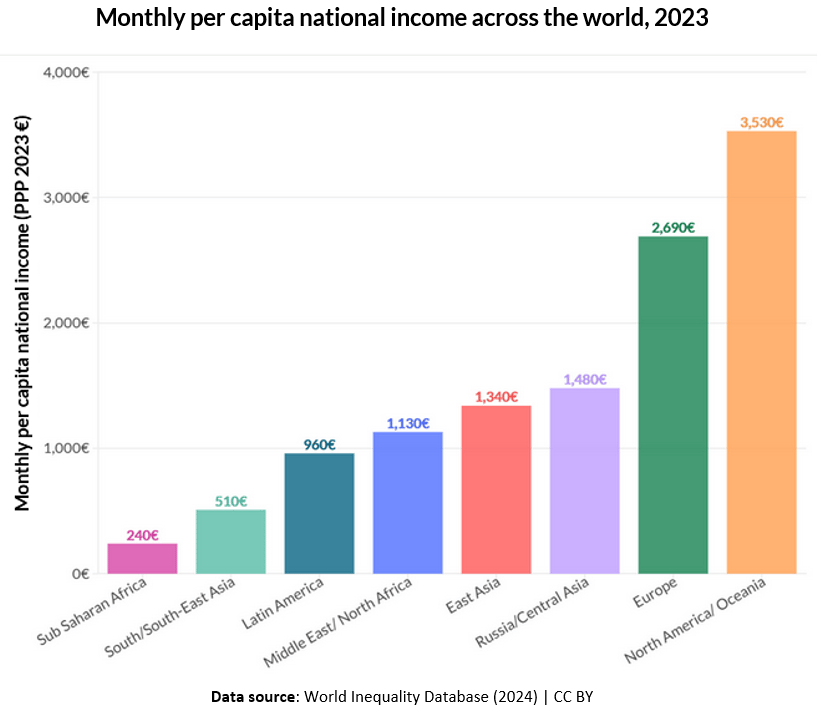
There is a strong correlation between former colonized regions that were forcefully used and taken over, such as Africa, South Asia, Latin America, and Southeast Asia, and being a developing nation.
On the contrary, there is a strong correlation between former colonizers or settler colonies such as the UK, France, Spain, Portugal, the Netherlands, Belgium, Canada, the U.S., Australia, and New Zealand. And being a developed nation.
How Global Inequality Shows Up in Consumerism
Resource Extraction: Raw materials are taken from developing countries for low profit to multinational corporations.
Cheap Labour & Exploitation: Goods are produced in countries with poverty cycles that forced low wages, weak labor protections and unsafe working conditions.
Environmental Burden: Wealthier countries outsource pollution and waste to poorer nations and
Cultural and Social Costs: Global brands often impose Western ideals of beauty, lifestyle, and consumer habits, weakening local cultures and indigenous communities.
Global inequalities are systemic and created through the simple principle of profit over justice. Being an ethical consumer simply means standing up against this principle and fighting against its effects.
Salaaz: Branding a Bigger Movement
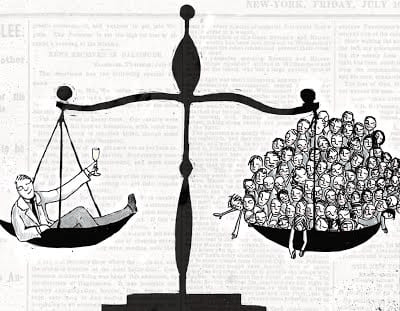
At Salaaz we support branding a bigger movement that doesn't target one community or one type of inequality but rather injustice as a whole. We know that the world stands on a form of greed that does not reflect anyone's values. We recognize the challenges of global suffering is driven by the injustices and systemic poverty in our market and and are working towards building a better outcome in any way we can.
The Benefits of Supporting Small Businesses
Build a stronger and healthier community/economy:Your money stays local, creating jobs and keeping neighbourhoods alive.
Fairness over profit: Small businesses often prioritize people, ethics, and sustainability over mass profit.
Creativity and culture: Small businesses allow for creativity and culture to thrive, bringing new ideas into the market.
Vote for the kind of world you want to live in: Supporting small businesses is a way to support not just ethical standards but, on a greater scale, the kind of world you want to live in. A world where multinational corporate greed is not controlling lands native to people.
Justice should never come second to profit. By choosing fairness, supporting small businesses, and rejecting greed, we can break the cycle of stolen land and stolen futures.